An AI-powered crypto aggregator for traders
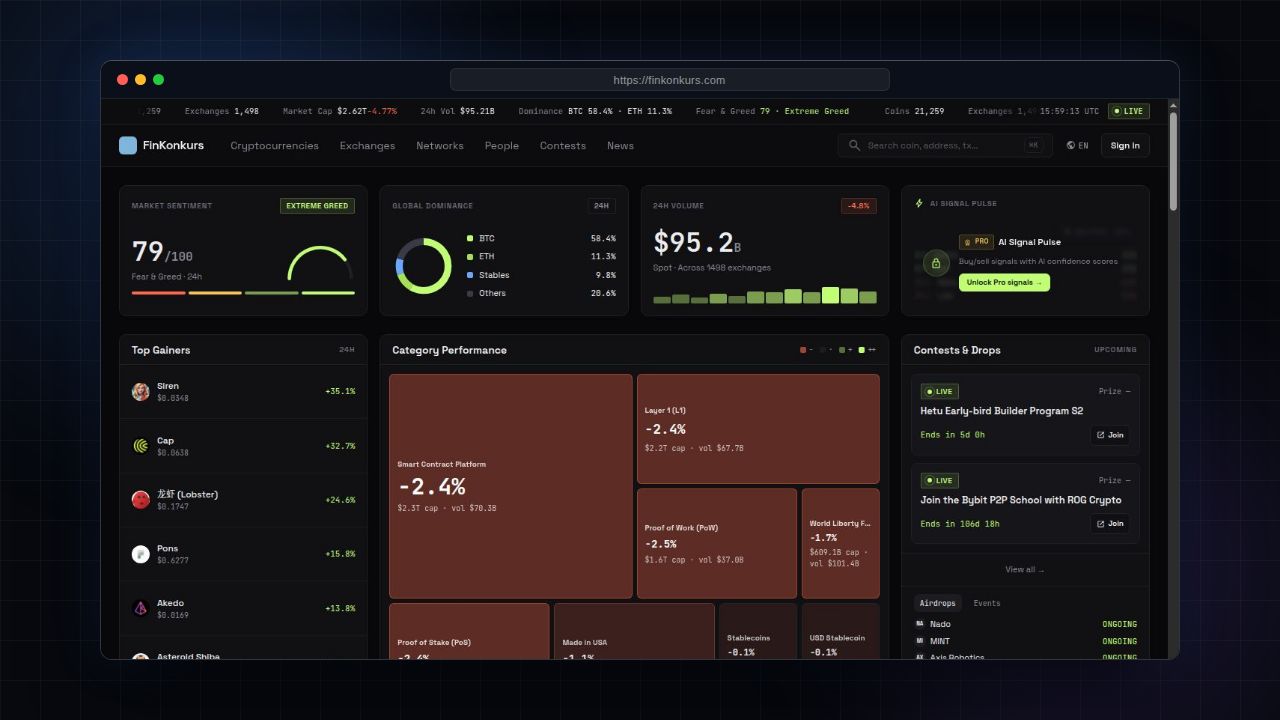
The brief was a "super CoinGecko": a crypto aggregator that goes beyond prices. Traders don't only ask what a coin costs. They ask whether a token can be trusted, what news and social media are saying about it and what is starting to move. This client, under NDA, wanted those answers next to the market data.
We led development for about nine months, from MVP through feature expansion, with a team of three to four developers.
Key features
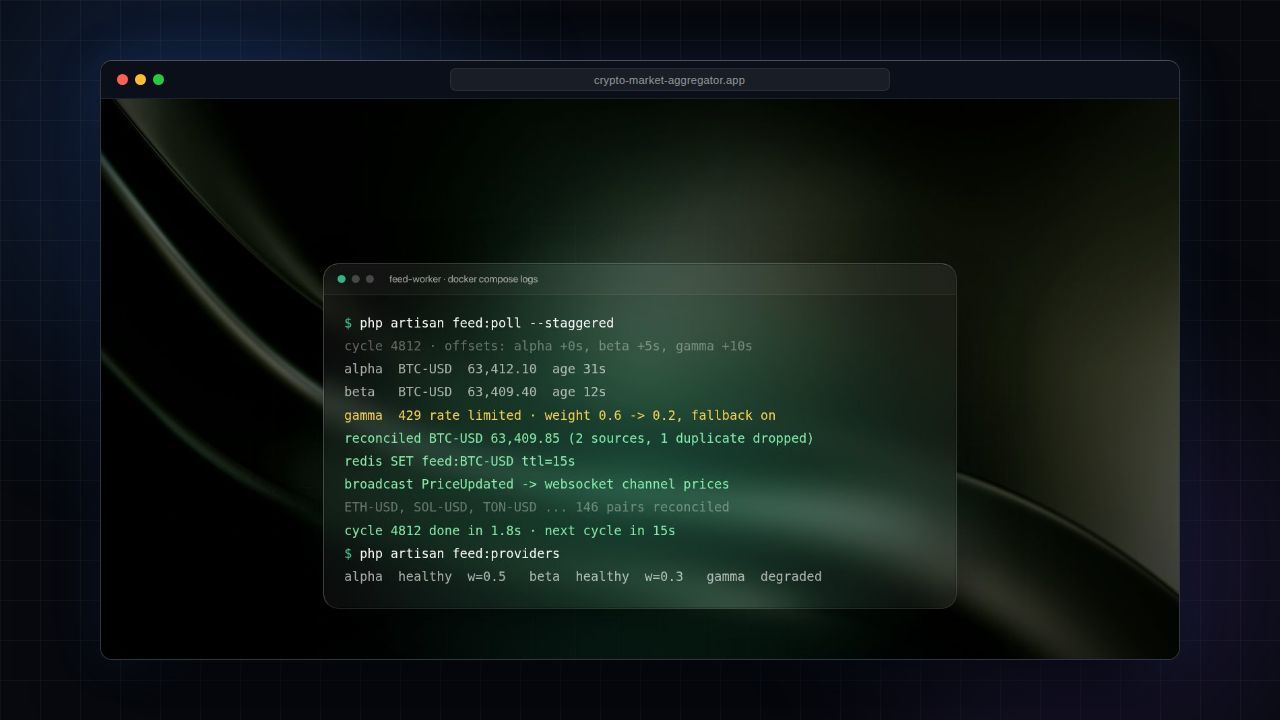
- Real-time market aggregation: crypto prices and coin metadata are collected continuously with reliable refreshes.
- Sentiment analysis: NLP models score news feeds, social media and user comments, so each coin carries a read on market mood as well as a price.
- Scam detection: anomaly detection, flagged addresses and suspicious patterns combine to flag risky tokens.
- AI trust scores: a per-coin trust score appears on coin pages and trending dashboards.
- Trending dashboards: views of trending coins together with the signals behind them.
- Community discussion: comments, voting and flagging, with moderation tools to keep discussion useful.
- Risk warnings with disclaimers: risk information is shown clearly, next to disclaimers about what an automated score can and cannot tell you.
Architecture and tech stack
Laravel and Vue.js application
The core platform runs on Laravel with a Vue.js frontend and PostgreSQL as the primary database. It handles users, coin data, community content and every page traders see.
Python NLP and machine-learning services
Sentiment analysis and scam detection run as Python services, next to the ML and NLP tooling they depend on. Keeping them separate from the web application lets the models change without touching the main codebase.
Queues and caching for heavy data volume
Market data, news and social feeds arrive constantly, and analyzing them is expensive. Ingestion and analysis run as RabbitMQ background jobs, so no user request waits on a model. Results go into Redis caching layers, and coin pages and dashboards read ready-made scores instead of recomputing them on every visit. This design kept the system stable under the flow of incoming data.
How the AI signals were built
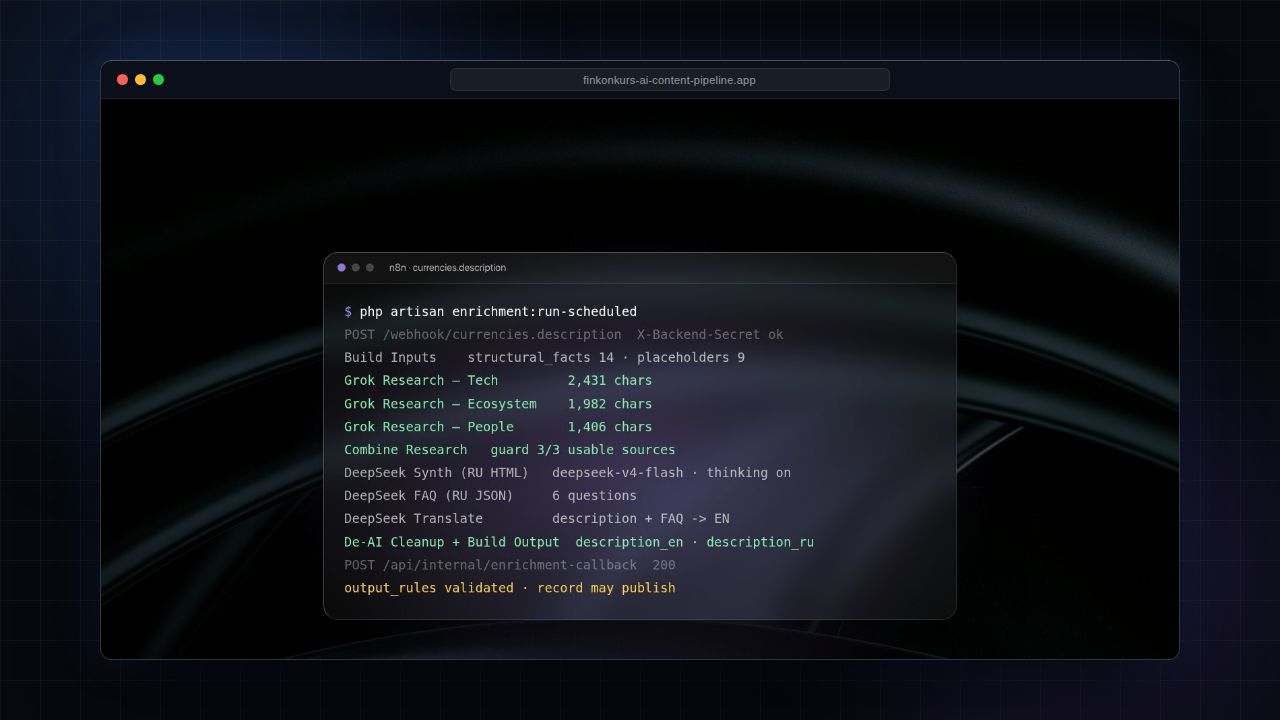
Sentiment and scam signals only help if traders can rely on them. The models were trained on external labeled data and then refined through a human feedback loop, so corrections to their output feed back into accuracy over time.
Scam detection doesn't rely on a single rule. It combines several signals: anomalies that stand out from normal behavior, addresses already flagged as suspicious, and known suspicious patterns. The trust score condenses those signals into something a trader can read at a glance on a coin page.
Balancing risk warnings and disclaimers
Calling a token risky has consequences, both for the project behind it and for traders who act on the label. The platform presents risk warnings as information, paired with clear disclaimers, rather than as verdicts.
Related work
For a different side of crypto data, see our Real-Time Crypto Market Aggregator, which reconciles several price providers into one feed, and Finkonkurs, a crypto prices, markets and news portal. This project combined our AI integration and automation and web app development services.